CoCoRaHS Data & Observations
We are proud to be a contributing member of CoCoRaHS since 19-Dec-2021. Our manual gauge measurements are made at 7:00am daily and submitted to the CoCoRaHS network. The current reports for Palm Beach county are shown on the map below.
Since the automated rain reports on this site are from midnight and the CoCoRaHS gauge is from 7:00am, the daily rain reports may differ due to the differing times for measurement resets (automatic gauge: midnight, CoCoRaHS gauge: 7:00am).
To see rainfall for a different date, select the desired date using the calendar icon, then click the “View Map” button to load updated observations for that day. This allows you to compare rainfall conditions across different events and time periods in South Florida. View the full South Florida CoCoRaHS rainfall map for detailed rainfall distribution and a regional overview of gauge based measurements.
Greenacres City:
CoCoRaHS is an acronym for the Community Collaborative Rain, Hail and Snow Network. CoCoRaHS is a unique, non-profit, community-based network of volunteers of all ages and backgrounds working together to measure and map precipitation (rain, hail and snow). By using low-cost measurement tools, stressing training and education, and utilizing an interactive Web-site, their aim is to provide the highest quality data for natural resource, education and research applications. The CoCoRaHS network originated with the Colorado Climate Center at Colorado State University in 1998 thanks in part to the Fort Collins flood a year prior. In the years since, CoCoRaHS now includes thousands of volunteers nationwide.
The CoCoRaHS precipitation measurements are done every morning using three manual rainfall gauges: a 4-inch Tropo rain gauge, a 4-inch Stratus, and an 8-inch Standard Rain Gauge. These instruments are used to report 24-hour rainfall totals for a 24-hour period to CoCoRaHS, with the Standard Rain Gauge serving as the primary reference instrument. The automated weather station rainfall data is routinely compared against the Standard Rain Gauge, which can be read to 0.1 mm, to ensure accuracy, consistency, and quality control of precipitation measurements.
Here is an observer’s guide to measuring and reporting precipitation data.
CoCoRaHS Rain Gauge and Evapotranspiration Site
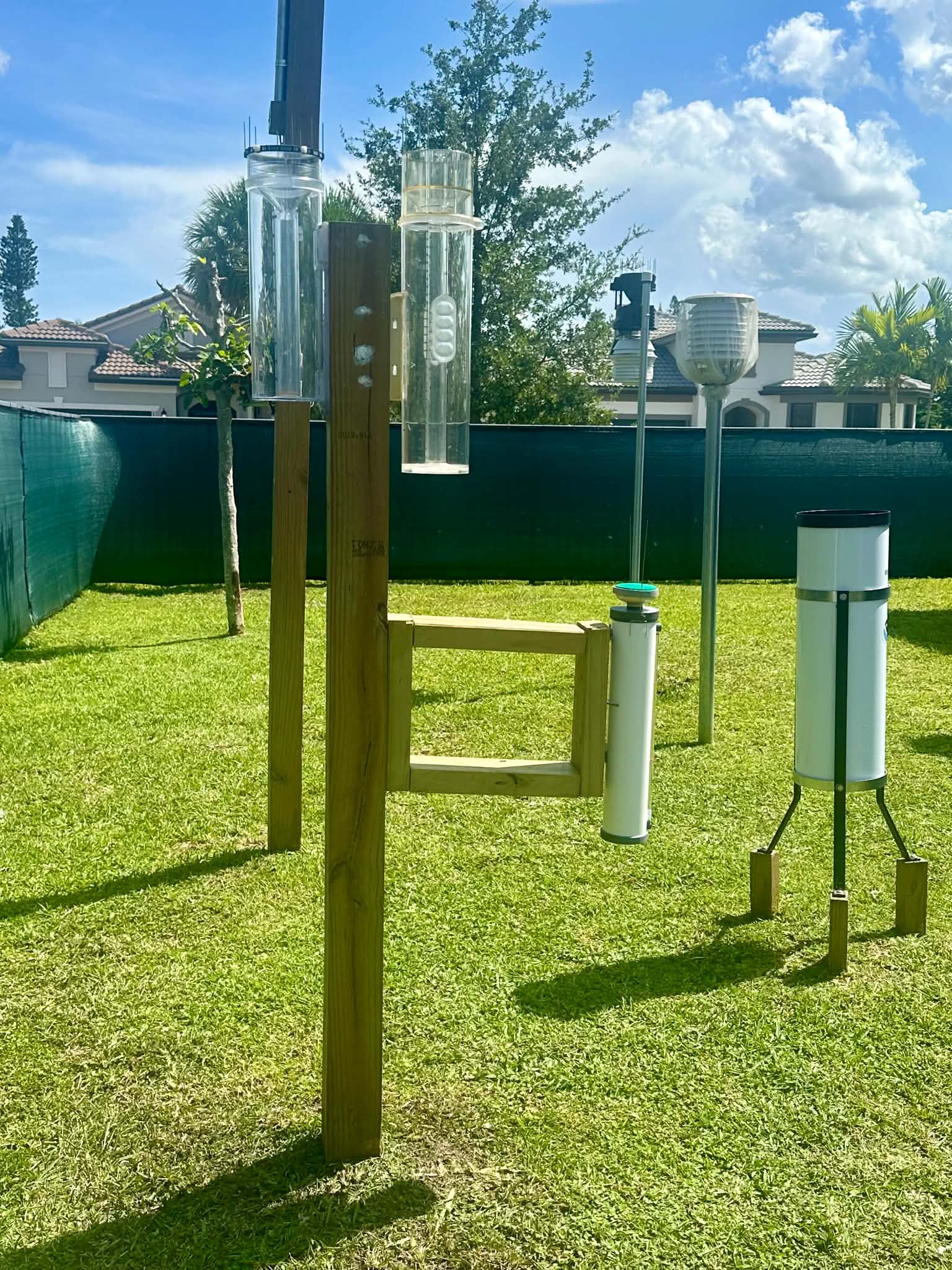
8-Inch Standard Rain Gauge (Primary Observation Gauge)
